September 03, 2026
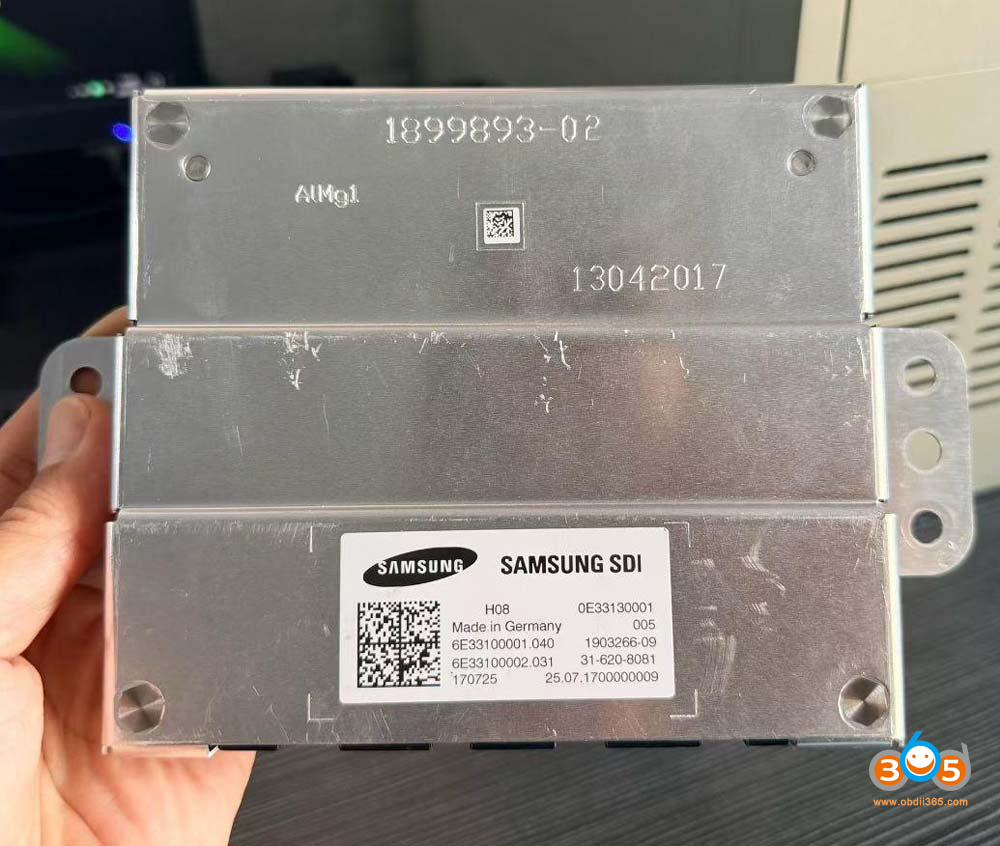
In Volvo SPA platform vehicles (XC90, XC60, S90 etc), mileage data is synchronized across all relevant modules throughout the vehicle.
Synchronization risk: The SPA platform’s mileage synchronization logic is highly stringent. Should a replacement instrument cluster (DIM) contain a mileage reading higher than the vehicle’s current stored value, the system will automatically overwrite and synchronize all modules to the higher mileage figure. This action is irreversible and cannot be rolled back.
Mileage data is synchronized among 4 electronic control units. The system defaults to and displays the highest mileage value among the 4 modules. Therefore, all 4 modules must be disassembled and modified to ensure consistency.
Disassemble 4 modules:
DIM: MB9DF126
CEM: SPC5748
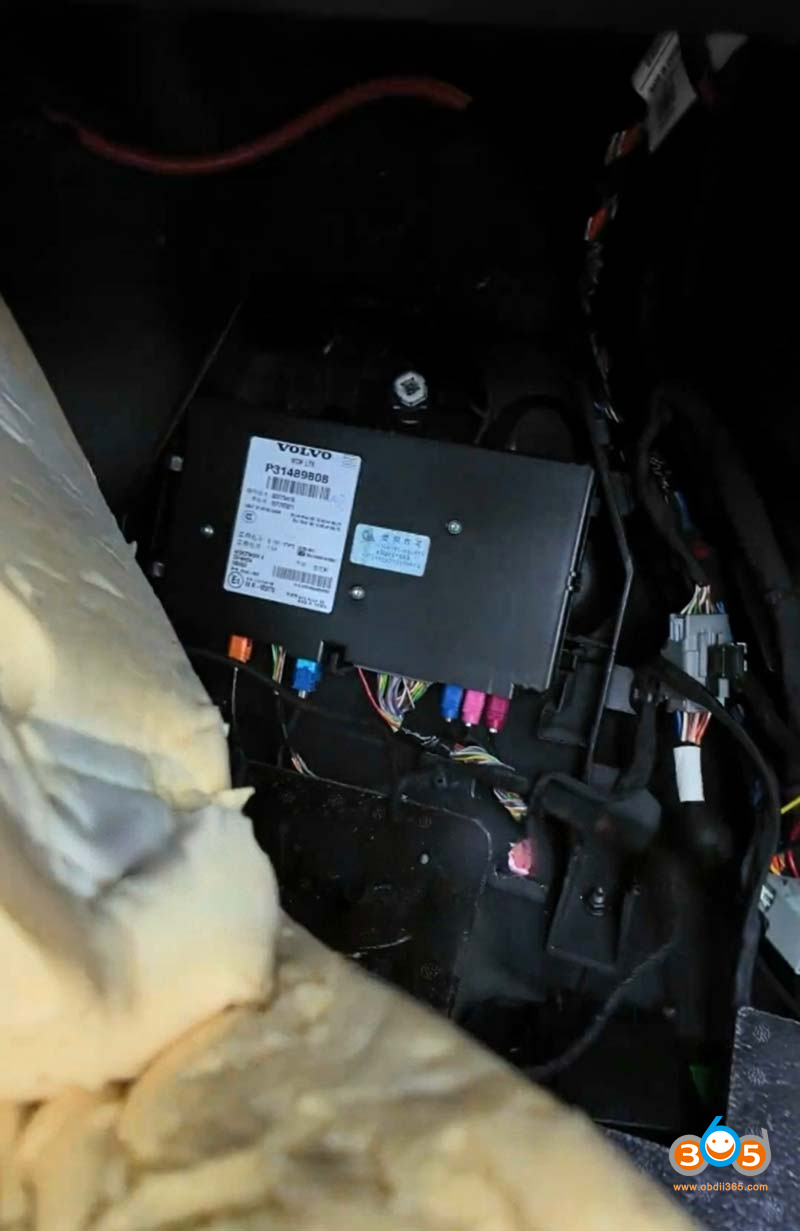
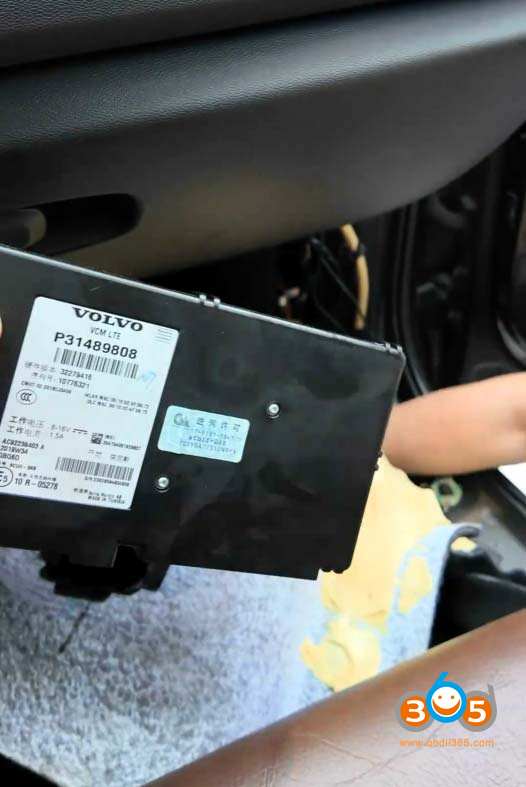
VCM: SPC564B
Airbag/SRS: P32221372

Precautions for Module Removal:
-
Do not remove or install modules while the vehicle is electrically live.
-
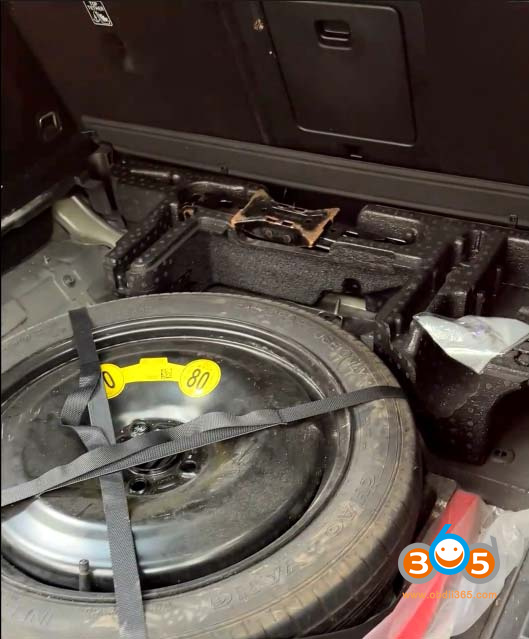
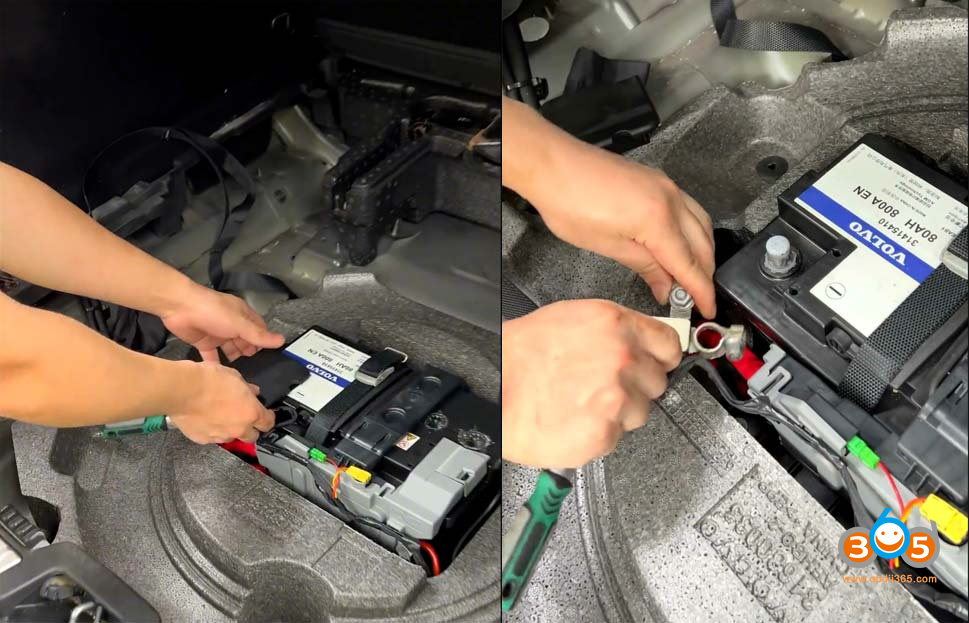
The battery is located under the spare tire in the trunk.Disconnect both the positive and negative terminals of the battery.


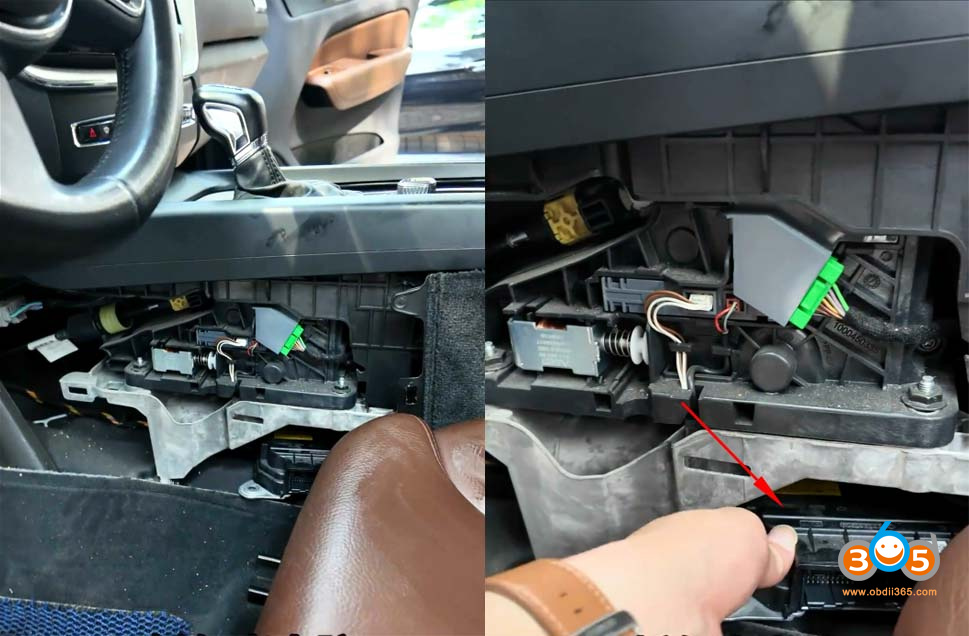
Remove the airbag module (SRS)– The airbag module is located beneath the center armrest/center console.

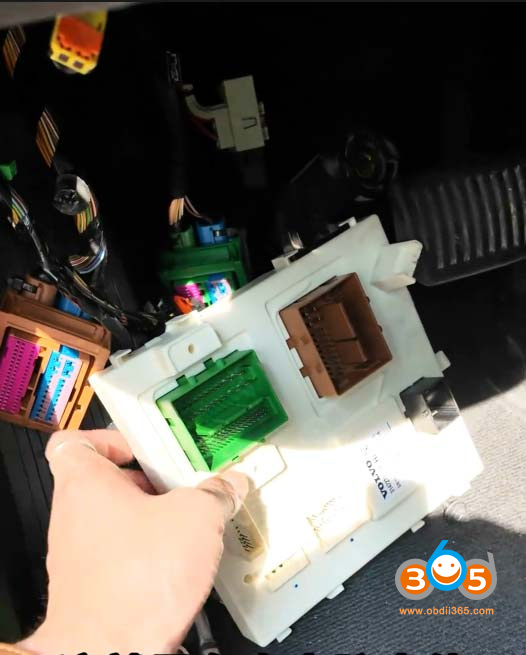
Remove the body control module (BCM/CEM)– The body computer is located on the left side under the steering wheel.


Remove the instrument cluster (DIM)–
Note:The dashboard trim panel at this location overlaps/presses against the instrument cluster housing. The center console (center stack)mustbe removed first to access and release the cluster.


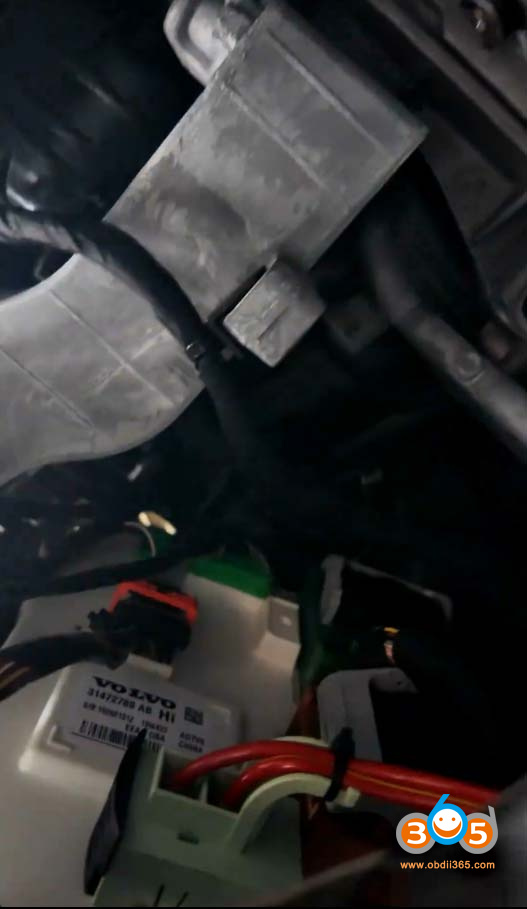
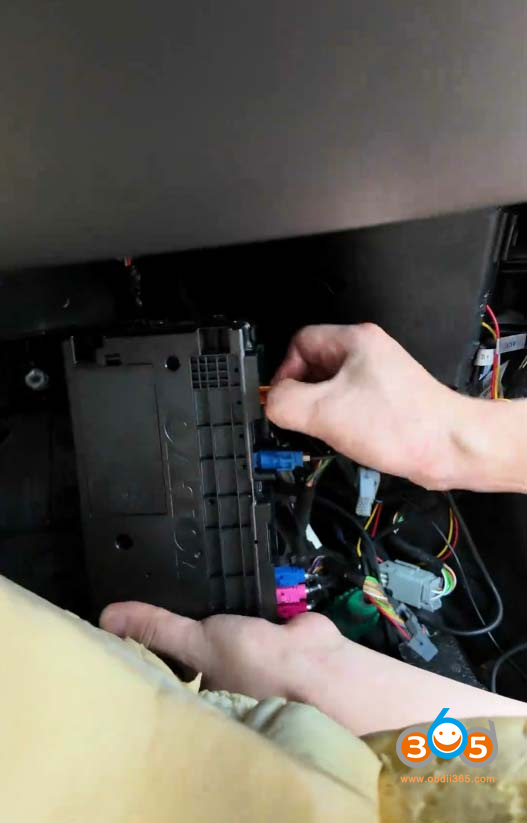
Remove the gateway module (CGW)– The gateway module is located under the front passenger footwell/carpet area. It may also be located on the right side of the trunk.


The mileage can be adjusted by reading the data from each of these modules individually.
What tool can be used for mileage adjustment?
OBDSTAR won’t do it.
SMOK can.
Additionally,CG100Xis scheduled to release a new firmware/software update shortly that will add mileage adjustment support for these new-generation Volvo models.

Posted by: jean at
08:53 AM
| No Comments
| Add Comment
Post contains 304 words, total size 14 kb.
September 02, 2026
Here comes the solution for Land Rover P400 BECM BMS hybrid battery module fault code P0AA066.
Fault Code P0AA066:
Fault code P0AA0-66 in Land Rover and Range Rover hybrid (PHEV) vehicles means "HV/EV battery positive contactor circuit – signal has too many transitions/events,” indicating the Battery Energy Control Module (BECM) refuses to close the high-voltage safety contactors because internal counters or signals exceeded their safe limits.

Root case:
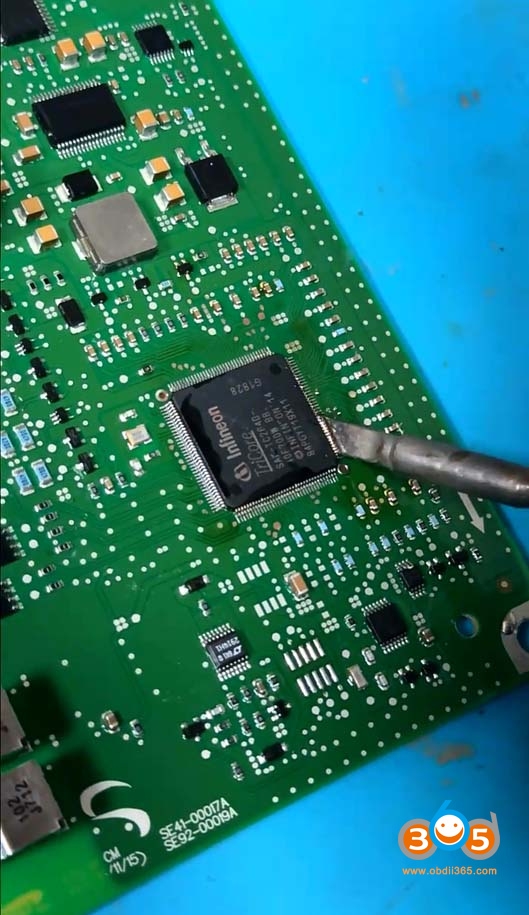
Internal BECM Chip Failure:Corrupted data or physical wear on an internal chip (such as the TC264 processor) inside the battery management unit.

Contactor Cycle Overflow:The module records "positive contactor switching cycles exceeded” due to false or excessive signal transitions.
Repair Solution:
Full Unit Replacement:Dealerships typically want to replace the entire high-voltage battery pack or BECM unit at a very high cost.
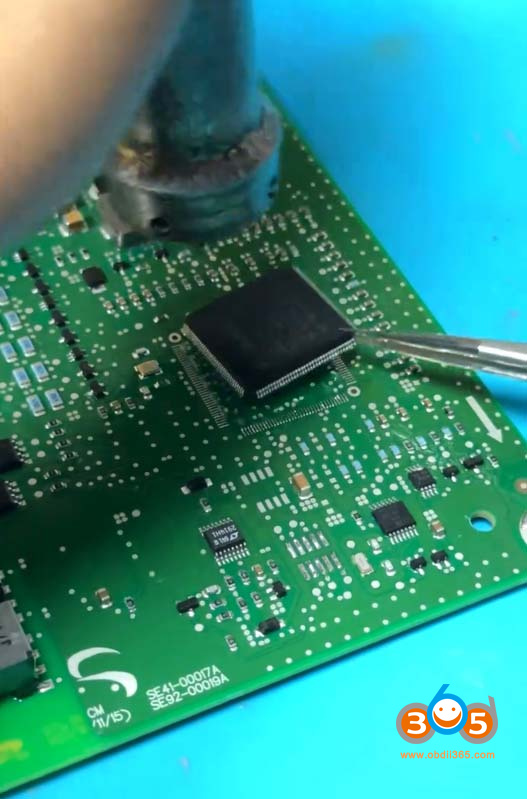
Component-Level Repair:Specialized auto-electric workshops can fix this without replacing the whole battery by replacing and reprogramming the specific faulty processor chip on the BECM board.
1). Replace with a brand new MCU chip.


2). Reflash data to the new MCU chip with proper programmers (such asJLR Pluto,Launch X431 PAD VII).
Posted by: jean at
09:17 AM
| No Comments
| Add Comment
Post contains 189 words, total size 6 kb.
September 01, 2026
What is the difference between Thinkcar 689BT and 689BT Pro?
They share the same professional diagnostic foundation, including OE-level full-system diagnostics, ECU coding, bi-directional control, 35+ service functions, CAN-FD and DoIP support.
So what exactly are you getting when you choose the PRO model?
The THINKSCAN 689BT PRO isn't designed to replace the 689BT.
Instead, it's built for technicians who want to move beyond traditional scan-tool diagnostics into a more advanced repair workflow.
Both models provide the core capabilities expected from a professional bidirectional scan tool. Where they begin to differ is in how technicians diagnose complex faults and what they can do after the fault has been identified.
The THINKSCAN 689BT PRO adds three major capabilities:Vehicle Topology Mapping, AI Repair Guidance, and J2534 Pass-Thru support.

If your work focuses on fault diagnosis, maintenance, ECU coding, active testing, and everyday repair, the THINKSCAN 689BT already provides a powerful professional diagnostic platform.
If you regularly diagnose complex vehicle networks, want AI-assisted fault analysis, or need compatible OEM programming workflows, the THINKSCAN 689BT PRO is built for that next level of work.
In this comparison, we'll explain exactly where the two scanners differ, who each model is designed for, and whether choosing the THINKSCAN 689BT PRO makes sense for your workshop.
Same Diagnostic Foundation, Different Workflow
Before looking at the differences, it's important to understand how much the two scanners already have in common.
|
Capability |
THINKSCAN 689BT |
THINKSCAN 689BT PRO |
|---|---|---|
| OE-Level Full-System Diagnostics | Yes | Yes |
| ECU Coding | Yes | Yes |
| Bi-Directional Control / Active Tests | Yes | Yes |
| 35+ Service Functions | Yes | Yes |
| CAN-FD & DoIP Support | Yes | Yes |
| FCA SGW Access | Yes | Yes |
| Mercedes-Benz SGW Access | Yes | Yes |
| AutoVIN & AutoScan | Yes | Yes |
| 8" Touchscreen | Yes | Yes |
| 4GB + 64GB Memory | Yes | Yes |
| Vehicle Topology Mapping | — | Yes |
| AI Repair Guidance | — | Yes |
| J2534 Pass-Thru | — | Yes |
| Compatible OEM Programming Workflow | — | Yes |
| Best For | Advanced DIYers & Repair Shops | Professional Workshops & Advanced Repair |
Both models are professional diagnostic scanners capable of handling full-system diagnostics, ECU coding, active tests, maintenance functions, and modern vehicle communication protocols.
The difference isn't simply that the PRO can diagnose vehicles while the standard model cannot.
Both can.
The real difference is what happens around and after the diagnostic process.
The THINKSCAN 689BT PRO adds tools that help technicians understand complex faults faster, determine what to check next, and continue into compatible OEM programming workflows when necessary.
Find Complex Faults Faster with Topology Mapping
One of the biggest differences between the THINKSCAN 689BT and THINKSCAN 689BT PRO is Vehicle Topology Mapping.
With the standard THINKSCAN 689BT, technicians can perform OE-level full-system scans and access individual control modules to read fault codes, view live data, retrieve ECU information, perform active tests, and access available special functions.
The THINKSCAN 689BT PRO adds another way to view the results.

Instead of relying only on a conventional system list, the Topology Map displays supported control modules and their communication relationships as a visual vehicle network.
This helps technicians quickly identify:
- Which control modules are installed
- Which modules are communicating normally
- Which modules contain faults
- How different ECUs are connected
- Which area of the vehicle network may require further diagnosis
The advantage becomes much clearer when diagnosing vehicles with multiple warning lights or communication faults.
Imagine a vehicle arrives with ABS, SRS, EPS, and transmission-related faults at the same time.
With the THINKSCAN 689BT, you can still diagnose each affected system, read the fault codes, inspect live data, and perform active tests.
With the THINKSCAN 689BT PRO, the Topology Map gives you a visual overview of the network first.
If several faulted modules appear along the same communication branch, the technician can recognize that the faults may be related to a shared communication, gateway, wiring, or power issue instead of immediately treating every fault code as an independent problem.
Topology Mapping doesn't replace DTC analysis, live data, or active testing.
Instead, it helps technicians decide where to investigate first.
For routine diagnostics and straightforward faults, the THINKSCAN 689BT already provides the diagnostic capabilities most users need.
For workshops that frequently work with modern vehicles containing increasingly complex electronic networks, the THINKSCAN 689BT PRO can make the diagnostic process faster and easier to organize.
Go from Fault Codes to Next Steps with AI Repair Guidance
Another major upgrade on the THINKSCAN 689BT PRO is AI-assisted diagnostics and repair guidance.

Traditional diagnostic scanners give technicians information.
They identify DTCs, display live data, provide ECU information, and allow technicians to perform tests.
But identifying a fault code is often only the beginning of the repair.
A technician still needs to determine:
- What is most likely causing this code?
- What should I inspect first?
- Which component or circuit should I test next?
The THINKSCAN 689BT PRO adds AI-assisted tools designed to help organize that process.
A typical workflow can move from:
DTC Analysis → Likely Causes → Recommended Next Checks → Repair Guidance
For example, after a fault code is identified, AI Repair Guidance may provide information such as likely causes and recommended diagnostic directions, helping the technician determine whether to continue with circuit inspection, system testing, component testing, or other repair procedures.
The THINKSCAN 689BT PRO also supports AI analysis of diagnostic reports, providing another way to interpret scan results before beginning further testing.
This doesn't replace technician experience.
It also doesn't mean the scanner automatically repairs the vehicle or guarantees that the first suggested cause is the failed component.
Instead, AI Repair Guidance is designed to help technicians turn diagnostic information into a more structured troubleshooting process.
For experienced technicians, this can reduce the time spent organizing possible causes.
For less experienced users, it can provide useful direction on what to investigate after a fault code appears.
The standard THINKSCAN 689BT still provides the diagnostic data and testing capabilities required to diagnose the vehicle manually.
The PRO simply adds another layer between finding the fault and deciding what to test next.
Expand Your Capabilities with J2534 Pass-Thru
The third major difference between the THINKSCAN 689BT and THINKSCAN 689BT PRO is J2534 Pass-Thru support.
Like Topology Mapping and AI Repair Guidance, J2534 doesn't replace the scanner's existing diagnostic functions. It extends what a workshop can do when a repair requires compatible OEM software.
With the THINKSCAN 689BT, technicians can perform full-system diagnostics, ECU coding, active tests, maintenance functions, and other supported repair procedures directly through the diagnostic platform.
For many repair shops, these capabilities are sufficient for everyday diagnostics and repairs.
The THINKSCAN 689BT PRO adds a J2534-capable interface for communication between compatible OEM software on a Windows PC and the vehicle.

A typical J2534 workflow looks like this:
OEM Software → Windows PC → THINKSCAN 689BT PRO GVCI → Vehicle → ECU
This becomes important when a repair requires manufacturer software.
For example, imagine that a technician diagnoses a failed control module and installs a replacement.
The physical repair may be complete, but the replacement module could still require manufacturer programming or software configuration before the vehicle can return to service.
With the THINKSCAN 689BT, the workshop may need a separate J2534 Pass-Thru device or may need to outsource the programming procedure.
The PRO model includes a J2534-capable GVCI for compatible OEM software workflows, reducing the need for an additional dedicated Pass-Thru interface.
This can be particularly valuable for workshops that regularly handle:
- Module replacement
- ECU reprogramming
- OEM software updates
- Manufacturer-specific programming procedures
- Software-related repair workflows
However, J2534 support does not mean the THINKSCAN 689BT PRO includes OEM programming software.
OEM software, manufacturer subscriptions, security authorization, calibration files, and other manufacturer-specific requirements must be obtained separately where required.
J2534 compatibility also varies by manufacturer, vehicle, model year, ECU, OEM software, and programming procedure.
Posted by: jean at
08:37 AM
| No Comments
| Add Comment
Post contains 1286 words, total size 11 kb.
32 queries taking 0.2696 seconds, 199 records returned.
Powered by Minx 1.1.6c-pink.